
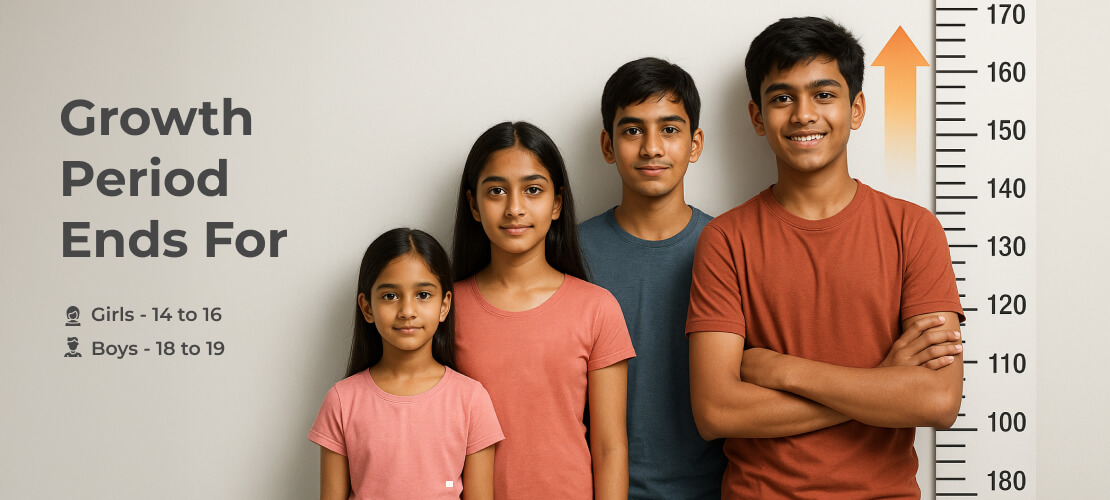
Have you ever wondered when your child will reach their final height, and if their growth is taking place as it should? This is one of the most common questions on the minds of many parents, as they wish to gain a general understanding of the patterns of growth in children for reassurance. From the moment your children are born, they embark on an incredible journey of physical development, characterised by rapid changes in their size and proportions. However, this growth doesn’t happen continuously but rather in distinct phases.
One of the most fascinating aspects of this journey is how growth patterns differ between genders, particularly during the crucial years of puberty. Although both boys and girls experience significant growth, the timing, duration, and intensity of their growth vary considerably. Girls usually enter puberty earlier than boys and therefore tend to reach their adult height at a younger age. On the contrary, boys usually start their growth a little later than girls, but their growth period is more prolonged, extending into their late teens or even early twenties in some cases.
Female Height Growth Timeline: When Do Girls Stop Growing?
For girls, the period of active growth typically ranges between 14 to 16 years of age; however, there can be some slight variations. The onset of early puberty can have a notable influence on when a girl stops growing. When a girl enters puberty at a younger age, also known as precocious puberty, the initial growth can be quite intense, making her appear taller than her peers for a time. As a result, girls who experience puberty early may stop growing at a younger age, leading to a shorter adult height compared to what their genetic potential might have indicated.
A significant milestone in a girl’s pubertal development is menarche, her first menstrual period. When menarche occurs, it is a strong indicator that the most rapid phase of growth has already passed. Although a girl may continue to grow for some time after menarche, this growth tends to be slower and less significant. On average, girls may gain another 1 to 2 inches in height in the one to two years following their first period, after which their growth largely slows down. Diet plays a key role in height growth. Make sure you avoid these surprising foods that stunt growth during puberty.
Average Height Growth Chart for Girls (Ages 8–18) (CDC Data )
| Age (Years) | Average Height (cm) | Height Range (cm) |
|---|---|---|
| 8 | 128 | 121 – 135 |
| 9 | 133 | 125 – 140 |
| 10 | 138 | 130 – 146 |
| 11 | 144 | 135 – 152 |
| 12 | 149 | 140 – 158 |
| 13 | 155 | 145 – 163 |
| 14 | 158 | 147 – 165 |
| 15 | 159 | 148 – 167 |
| 16 | 160 | 149 – 168 |
| 17 | 160.5 | 150 – 169 |
| 18 | 161 | 150 – 170 |
Male Height Growth Timeline: When Do Boys Stop Growing?
In the case of boys, the journey to their final height typically extends beyond that of girls and usually ranges between 16 to 18 years of age. However, some boys may experience subtle additional growth even into their early twenties, sometimes up to 20 to 22 years old. The idea that a later onset of puberty allows for a longer growth window is particularly relevant for boys. Unlike girls, who usually begin puberty earlier, boys often start their pubertal changes around the age of 11 or 12. With this delayed start, their bones still have time to grow and lengthen before the epiphyseal plates eventually close. Testosterone, the primary sex hormone in males, plays an important role in the male height growth timeline. As boys go through puberty, their testosterone levels increase. This hormone tells the growing parts of the bones to work harder, which leads to a quick increase in height, called a growth spurt. While testosterone helps drive this growth, it also signals the epiphyseal plates to close over time. Once the growth plates close, height increase comes to an end.
Average Height Growth Chart for Boys (Ages 8–18) (CDC Data)
| Age (Years) | Average Height (cm) | Height Range (cm) |
|---|---|---|
| 8 | 130 | 123 – 137 |
| 9 | 134 | 126 – 141 |
| 10 | 138 | 129 – 146 |
| 11 | 143 | 133– 152 |
| 12 | 149 | 138 – 158 |
| 13 | 156 | 144 – 164 |
| 14 | 163 | 150 – 172 |
| 15 | 169 | 156 – 177 |
| 16 | 173 | 160 – 180 |
| 17 | 175 | 162 – 182 |
| 18 | 176 | 163 – 183 |
Disclaimer: The above growth charts shows the average and healthy height ranges for girls and boys by age (8–18 Years) as per the Centers for Disease Control and Prevention (CDC) data. Use as a general reference only. Consult your pediatrician for personal growth assessments.
How to Know If You’re Done Growing: Key Signs to Look For
Wondering how to know if you’re done growing? It’s one of the most common questions among adolescents and their parents. While there is no single visible sign that applies to everyone at the same time, there are several indicators, both medical and observable, that can offer useful clues. Let’s understand some of the signals that help bring clarity to this frequently asked question:
Tanner Stage
One of the less direct but still informative indicators of nearing the end of growth, particularly in relation to puberty, is the Tanner Stage. This stage describes the progression of physical changes during puberty, such as the development of pubic hair and breasts in girls, and genital development and pubic hair in boys. The Tanner Stage is a broader marker/sign of pubertal maturity and is strongly linked to the completion of height growth.
Slowed Shoe or Clothing Size Changes
Another practical and easy-to-observe sign that growth is slowing down or has stopped is the slowdown or complete stop in changes to shoe and clothing size. When children and adolescents are in their rapid growth periods, they quickly outgrow their shoes, pants, and even shirts. If you’ve noticed that your shoe size hasn’t changed in over a year, or that your clothing size has remained consistent without feeling too small, it is a strong indicator that your height growth has likely come to an end. While changes may slow, some exercises like jumping or stretching routines can help you optimise your posture and final height.
How Delayed Puberty Can Extend the Growth Period
Delayed puberty, also known as “constitutional delay of growth and puberty” (CDGP) or simply being a “late bloomer,” can potentially extend the growth period. This condition is seen more often in boys than in girls.
The main reason for this extended growth lies in the timing of growth plate closure. In individuals with delayed puberty, the surge of sex hormones that starts and progresses puberty happens later than average. Because of this delay, the epiphyseal plates remain open longer, allowing for more time to grow. However, it’s equally important to avoid lifestyle habits that may stunt height growth during this extended period.
It is also important to note that while delayed puberty height growth can extend the time for height growth, the final adult height may still be slightly less than what it might have been with earlier puberty. Pediatricians closely monitor these growth patterns using tools like bone age X-rays to assess how much growth potential remains in late bloomers.
FAQs
Tanner staging describes physical development during puberty in five stages:
- Stages II–III: Rapid height growth.
- Stage V: Full maturity and nearing the end of height growth.
- To support growth: Focus on protein, calcium, vitamin D, zinc, and iron.
- To avoid: Limit sugary drinks, processed junk food, and excessive caffeine, as they may interfere with hormone function and nutrient absorption.

Hitesh Chauhan
Lead Health & Wellness Science Writer
Health researcher & science writer specializing in gut microbiome health, clinical nutrition, and metabolic balance.