
Your gut microbiome, home to trillions of bacteria living in your digestive system, plays a vital role in your overall health. It supports your inner ecosystem, i.e. digestion, immunity, mood, and metabolism, and the food you eat directly shapes it too.
Let’s talk about two of the most popular diet choices today: plant-based and keto, both taking a very distinct approach to nutrition. But which one is a better choice for your gut health? Let’s explore how each diet affects your microbiome and which may be the right fit for you.
How Diet Shapes Your Gut Microbiome

Before we begin comparing the two, it’s important to understand that gut bacteria lives on what you feed them. Good/beneficial bacteria love fiber-rich foods such as fruits, vegetables, and whole grains, while harmful bacteria feed on sugar and unhealthy fats.
Now, variety is just as important as the quality of what you eat. The more different foods you add to your meals, the more diverse your gut microbiome becomes. A diverse microbiome means you have many kinds of good bacteria, each carrying out different tasks, some support digestion, others strengthen the immunity, and some affect mood and energy. To put it simply, consuming a wide range of foods gives your gut more tools to keep your body balanced and healthy.
The Plant-Based Diet
A plant-based diet works around whole foods such as vegetables, fruits, legumes, nuts, seeds, and whole grains. It is naturally high in fiber, antioxidants, and plant compounds called polyphenols that promote gut health.
Benefits for Your Gut:
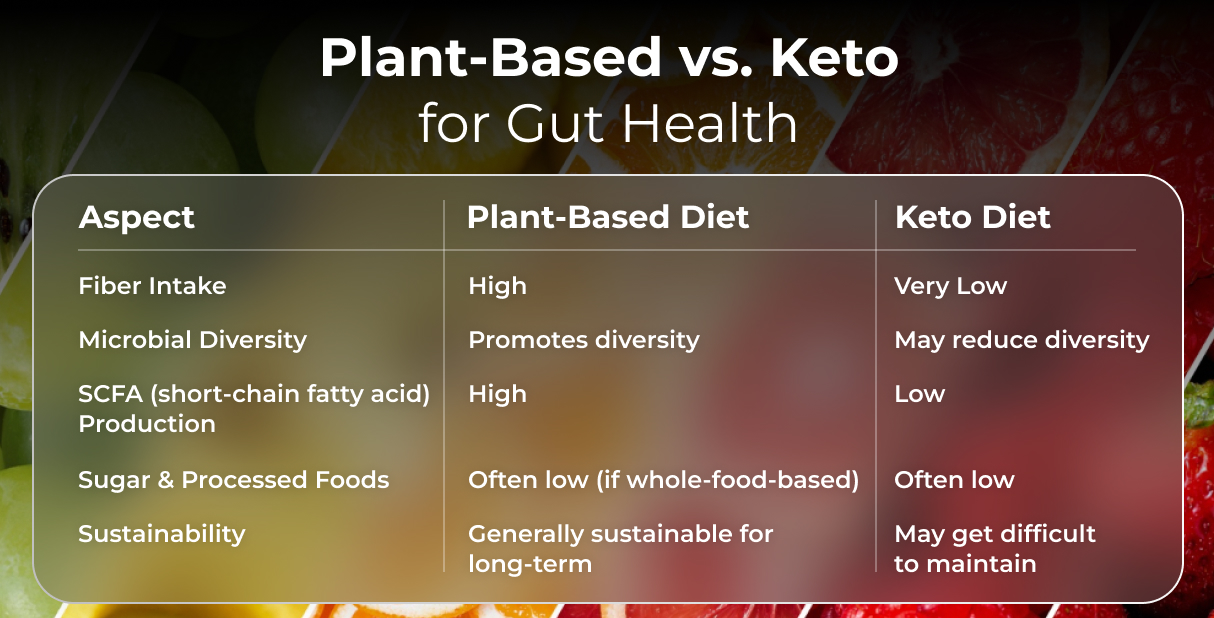
Feeds Good Bacteria: Fibre in plant foods serves as a prebiotic, meaning it feeds friendly or good bacteria such as Bifidobacteria and Lactobacillus. These microbes produce short-chain fatty acids (SCFAs) like butyrate, which reduce inflammation, strengthen the gut lining, and may lower the risk of colon cancer.
Improves Regularity: High fibre content in plant based diet helps maintain smooth digestion, support regular bowel movements and prevents constipation.
Boosts Diversity: Eating varied types of plant foods introduces different kinds of fibre, which helps grow a more diverse microbiome.
Potential Downsides
Some people may experience bloating or gas when increasing fiber intake too quickly.
If not well-planned, plant-based diets can lack certain nutrients such as B12, iron, or omega-3s fatty acids.
The Keto Diet
The ketogenic (keto) diet is high in fat, moderate in protein, and very low in carbohydrates. It is designed to put the body into ketosis, a state where it burns fat for fuel instead of glucose.
Effects on the Gut:
- Reduced Fiber Intake: Since keto diet restricts foods like whole grains, lentils, apples, and bananas, it therefore cuts out much of the fiber that feeds good gut bacteria. This can leave fiber-loving microbes without enough fuel.
- Risk of Imbalance: Some research shows that without prebiotic fibre intake, kito may encourage an imbalance (dysbiosis), in the gut, where good bacteria decline and harmful microbes thrive.
- Possible Inflammation: If the diet relies mainly on foods that are high in saturated fat (such as fatty meat, butter, or processed keto snacks), it may increase inflammation and even weaken the gut barrier.
Few Benefits of Keto:
- Keto can help reduce symptoms for some people with gut issues like SIBO (Small Intestinal Bacterial Overgrowth) by cutting back on fermentable carbs.
- It often limits sugary and processed food items, which can benefit the overall gut health indirectly.
So, Which Is Better for Your Gut Microbiome?
Based on what we have learned about gut health, a thoughtfully planned plant-based diet has clear advantages for nurturing a balanced microbiome. The rich supply of fibre, polyphenols, and variety of plant foods makes it an ideal choice for fueling good bacteria.
That said, the keto diet may offer short-term benefits for certain people, especially those with specific medical conditions like epilepsy or insulin resistance. However, if your goal is long-term gut health, its low-fibre nature makes it less effective and is a significant drawback.
Can the Two Diets be Combined
Yes — a hybrid, keto-friendly plant-based diet is possible:
Prioritise low-carb, high-fiber vegetables like leafy greens, broccoli, and cauliflower.
Your diet must include healthy fats from nuts, avocados, seeds, and olive oil.
Avoid sugar and ultra-processed keto foods.
This keto-friendly plant-based diet is not strict keto, rather it focuses on whole foods, good fats, and high fibre, making it a balanced middle ground for good gut health.
Conclusion
If your goal is to improve your gut microbiome, a whole-food, plant-based diet is the clear winner. It provides the fiber and nutrients your beneficial bacteria need to thrive.
Still, the best diet is the one you can maintain and that leaves you feeling energised. If you prefer keto, aim to include more low-carb, high-fiber vegetables.
Remember to listen to your body, pay attention to its signals, and when in doubt, consult a registered dietitian to find the diet that works best for you.
In case you fall short to decode those signals sent by your body, Bione has designed personalised Gut wellness programs for men and women, you can try that will lead you to your ultimate wellness goals.