
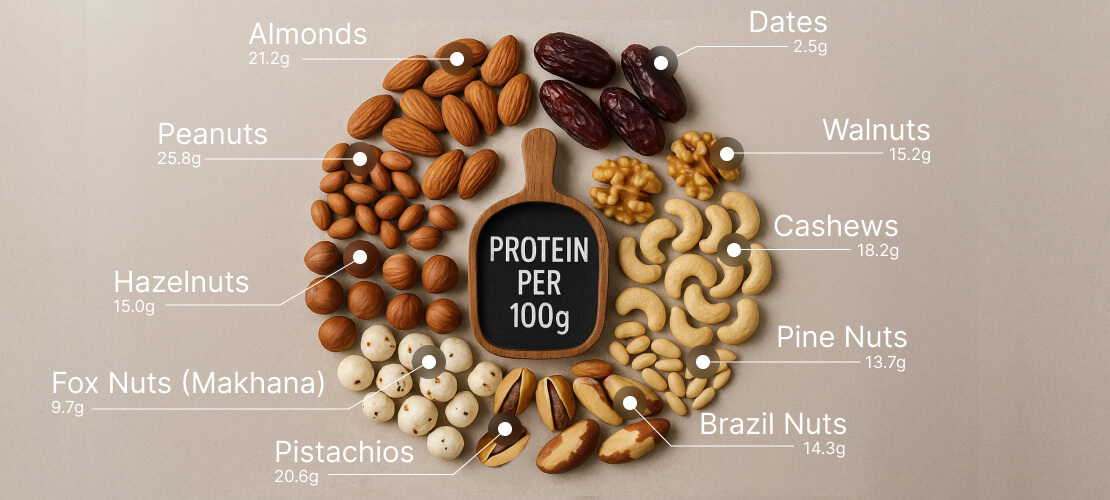
When it comes to natural protein sources, dry fruits stand out as compact powerhouses of nutrition. Whether you’re aiming to build lean muscle, enhance your overall health, or increase your height, adding high-protein dry fruits to your diet can offer excellent benefits. These nutrient-dense snacks help repair body tissues and build muscle and contribute to bone growth, which is essential during adolescence and even into early adulthood.
In this comprehensive guide, we look at the best dry fruits that give you protein. You’ll find out how much protein is in 100 grams of each dry fruit and why they are good for your body. You’ll also find a detailed dry fruit protein chart to compare their nutritional content.
Let’s uncover the protein-rich dry fruits that are as tasty as healthy!
10 Highest Protein-Rich Dry Fruits
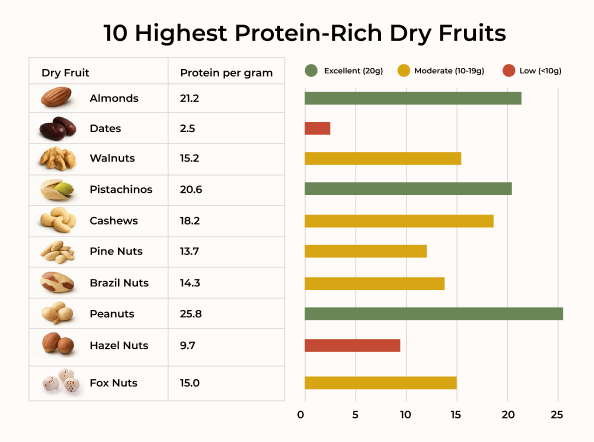
Below is a list of the top 10 dry fruits with high protein content, ideal for daily consumption to support natural height growth and overall health.
1. Almonds
Protein per 100g: 21.2g
Almonds are arguably the most celebrated dry fruit when it comes to nutritional value. Rich in antioxidants, healthy fats, and dietary fibre, almonds are especially beneficial for bone development and muscle repair. Their high protein content helps in building lean muscle mass, making them ideal for growing children and teens. It is also a keen ingredient of various protein powders. Additionally, almonds are packed with magnesium and phosphorus—both crucial for maintaining healthy bones and boosting the body’s calcium absorption rate. How to eat: Soaked overnight, as almond butter, or roasted with a pinch of Himalayan salt.
2. Dates
Protein per 100g: 2.5g
Though not very high in protein, dates play a crucial supporting role in a protein-rich diet. They are excellent for boosting energy levels due to their natural sugars and are rich in fibre, potassium, and iron. The fibre content aids digestion, ensuring that protein from other sources is effectively metabolized and absorbed by the body. How to eat: Stuff them with nuts, blend them into smoothies, or use them in protein energy balls.
3. Walnuts
Protein per 100g: 15.2g
Walnuts are a strong contender in the world of protein-rich dry fruits. What sets them apart is their high concentration of omega-3 fatty acids, which reduce inflammation and promote better joint and bone health. This makes them ideal for adolescents undergoing rapid growth, as well as older adults looking to maintain mobility. Walnuts are also known to support brain health, thanks to their high levels of DHA. How to eat: Crushed in breakfast bowls, baked into granola, or raw as a snack.
4. Pistachios
Protein per 100g: 20.6g
Often underrated, pistachios pack a serious punch in the protein department. They’re rich in B-complex vitamins like B6, which helps in the metabolism of protein and the formation of neurotransmitters. These green wonders also contain high levels of potassium and iron, supporting muscle contractions and oxygen transport respectively—both essential for an active lifestyle and growth. How to eat: Lightly salted, crushed in desserts, or as a garnish on salads and hummus.
5. Cashews
Protein per 100g: 18.2g
Cashews are beloved for their creamy texture and versatile taste. Apart from their impressive protein profile, they are a good source of zinc—a mineral that plays a vital role in immune function and cell growth. The presence of copper in cashews also helps in collagen production, aiding in healthy joints and skin. Cashews are particularly suitable for individuals who have nut allergies, as they are generally less allergenic than other nuts. How to eat: Roasted with herbs, added to gravies, or in trail mixes.
6. Pine Nuts
Protein per 100g: 13.7g
Pine nuts are packed with monounsaturated fats and provide a rich source of protein and iron. They contain pinolenic acid, which is known to suppress appetite and improve cholesterol levels. Though small, these nuts deliver a big nutritional punch and can be a unique addition to your high-protein snacking routine. How to eat: Toss into pastas, sprinkle over soups, or grind into pestos.
7. Brazil Nuts
Protein per 100g: 14.3g
Brazil nuts are rich in selenium, which supports the production of growth hormones and boosts immunity. The protein in Brazil nuts is high in amino acids like methionine and cysteine—essential for tissue repair and muscle development. They also support thyroid function, which indirectly affects metabolic rate and growth. How to eat: One or two a day is sufficient. Add to nut mixes or enjoy raw.
8. Peanuts
Protein per 100g: 25.8g
Technically a legume, peanuts are commonly grouped with dry fruits and offer the highest protein per 100g in this list. Affordable and accessible, peanuts support muscle development, increase satiety, and are ideal for post-workout recovery. Rich in biotin, niacin, and folate, they support both energy production and nervous system function. How to eat: Roasted, as peanut butter, or in chikkis and protein bars.
9. Hazelnuts
Protein per 100g: 15.0g
Hazelnuts are more than just a delightful addition to chocolates—they’re also packed with protein, vitamin E, and folate. These nutrients help in cellular repair, improve bone density, and support red blood cell production. They’re also rich in antioxidants, making them great for reducing oxidative stress in the body. How to eat: In chocolate spreads, baked goods, or eaten plain.
10. Fox Nuts (Makhana)
Protein per 100g: 9.7g
Fox nuts are light, easily digestible, and surprisingly protein-rich. They’re ideal for those who want a low-fat, gluten-free snacking option that still supports muscle health and bone growth. Their high magnesium and potassium content helps regulate blood pressure and supports muscle contractions.
How to eat: Roasted with ghee and herbs, as a breakfast cereal topping, or in curries.
Conclusion
Protein is essential for growth, muscle repair, hormone production, and maintaining overall body function. Including high protein dry fruits in your diet is an effortless way to meet your daily protein needs, especially if you follow a vegetarian or plant-based lifestyle. These dry fruits are not only protein-rich but also packed with essential micronutrients, healthy fats, and antioxidants that enhance your body’s ability to absorb and utilise nutrients effectively.
Rather than relying solely on protein powders for growth, incorporating a mix of dry fruits with high protein such as almonds, pistachios, and peanuts can be a more sustainable and holistic approach. They are convenient, portable, and require no preparation making them perfect for busy schedules and active lifestyles.
So next time you’re reaching for a snack, consider swapping processed food for a mix of protein-rich foods for height growth — your body will thank you.
A Word from Bione
At Bione, we believe in empowering you with science-backed solutions for better health and wellness. Our commitment is to provide trusted nutritional insights that help you make informed choices and our protein powder is a testament to it. Adding high-protein dry fruits to your diet is a simple yet powerful step toward a healthier, taller, and more vibrant version of yourself.
Your health journey starts with the right knowledge. Trust Bione to be your partner in well-being where ancient wisdom meets modern science.