









How Bione is Simplifying Your Healthcare Experience?
At Bione, we deliver more than just a product – we're your partner in proactive health management. Our services are spread all across India, offering everything from genetic health testing to health and wellness products.
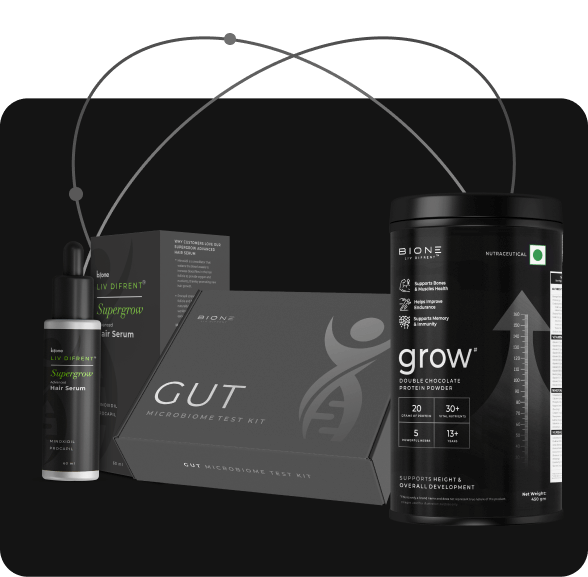
At Bione, you'll find an extensive range of products, including supplements, height growth protein powder, personalised diet plans, hair growth formulas, and more. Our comprehensive health checks are conducted in the comfort of your home, partnered with certified labs for assured quality and convenience.
How Can You Embrace a Healthier Tomorrow with Bione?
As Asia’s first DNA Testing Company in India, Bione brings personalised healthcare right to your doorstep. Our platform connects you with a world of genomic insights and wellness products, simplifying and enriching your healthcare journey. Our services include -
Why Should You Choose Bione’s Products?
We understand that quality matters when it comes to supplements. That's why Bione's health and wellness products are formulated with the highest quality ingredients, ensuring purity and efficacy. Our commitment to quality means you can trust our supplements to safely support your health journey. You can find these high-quality nutritional supplements online:
Height Growth Products
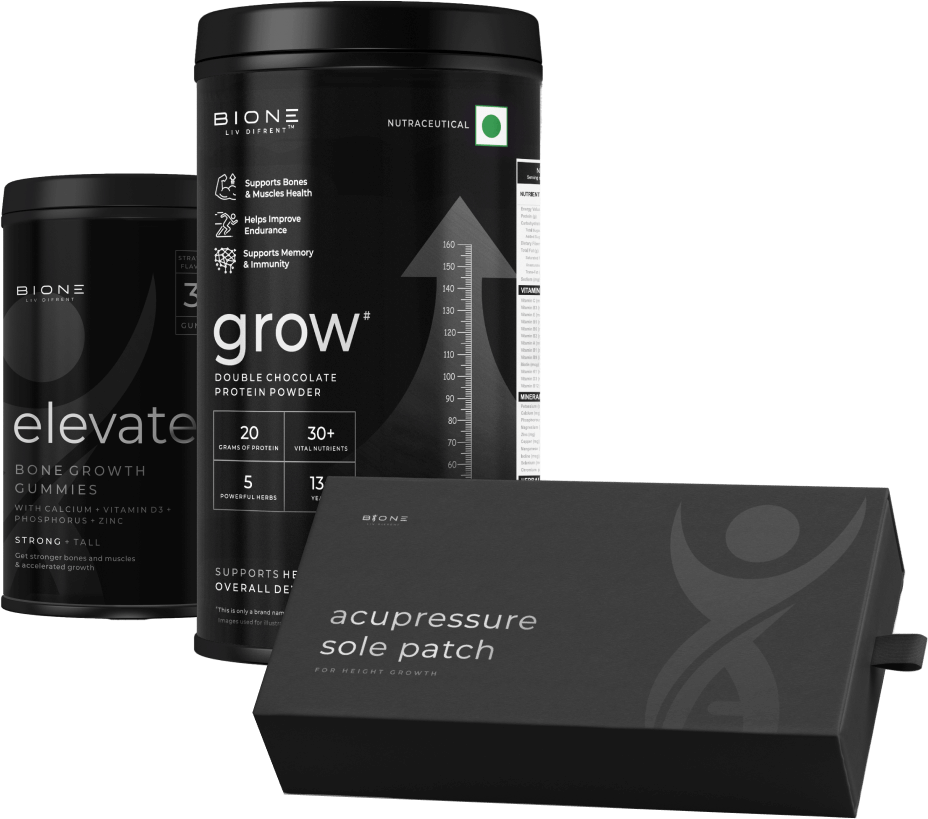
Height Growth Protein Powder
Specially designed for height increase, this protein powder is enriched with vital nutrients that promote bone growth and overall physical development. Ideal for teenagers and young adults, it supports the natural growth process.
Acupressure Insoles
These insoles are not just about foot comfort; they're infused with acupressure points to stimulate growth areas. Ideal for everyday use, they offer a unique combination of comfort and potential height-increasing benefits.
Bone Growth Gummies
Packed with essential nutrients for bone development, these gummies make taking supplements fun and delicious. Formulated for children and adolescents, they support healthy bone growth and density.
Diagnostic Kits
DNA Test
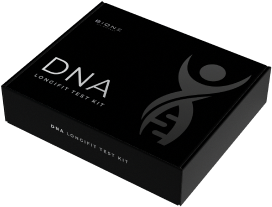
Bione's DNA Test provides a detailed analysis of your genetics, offering insights into ancestry, health risks, and traits. It's a key tool for personalised health and wellness planning.
Gut Microbiome Test
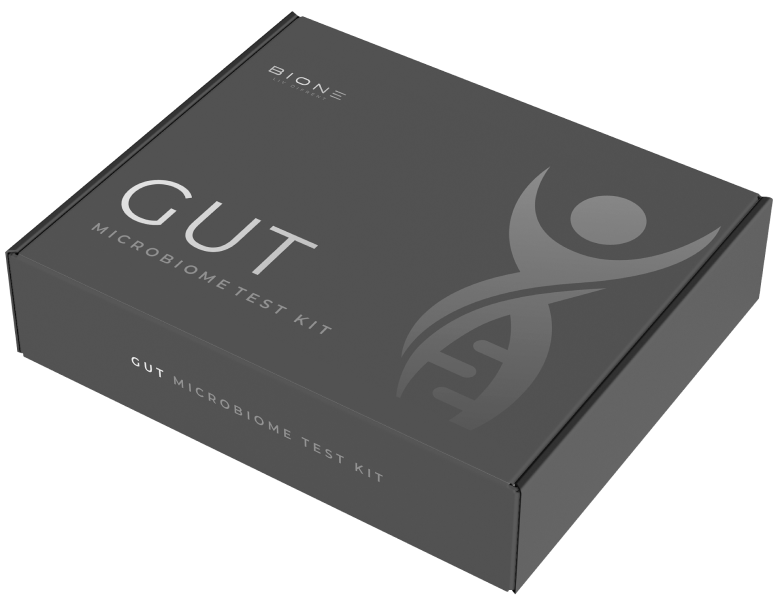
Bione, a leading microbiome testing company, conducts a comprehensive analysis of your gut microbiome, providing valuable insights into your digestive health and how it influences your overall well-being.
How Do the Diagnostic Kits Work, and When Do the Reports Come in?
DNA Test
- 1.Ordering the KitBegin by ordering the DNA Test kit from Bione's website.
- 2.Sample CollectionUpon receiving the kit, follow the instructions to collect a saliva sample using the provided tools.
- 3.Sending the SampleSeal your sample as instructed and send it back to Bione using the pre-addressed package.
- 4.AnalysisBione's lab professionals analyse your DNA sample, examining various genetic markers.
- 5.Report GenerationAfter thorough analysis, a detailed report is generated, which includes information about your ancestry, health risks, and other genetic traits.
- 6.Receiving the ReportTypically, you can expect to receive your report within 4-5 weeks after Bione receives your sample. The exact timeline may vary.
Gut Microbiome Test
- 1.Purchasing the KitYou can avail of Bione’s gut health testing services by ordering your Gut Microbiome Test kit from the website.
- 2.Collecting Your SampleUse the kit to collect a stool sample. Detailed instructions are provided to ensure the sample is collected correctly.
- 3.Returning the SamplePackage your sample using the materials provided and send it back to Bione for analysis.
- 4.Sample AnalysisExperts at Bione will analyse the microbial composition of your gut based on the stool sample.
- 5.Report PreparationThe analysis will result in a comprehensive report detailing your gut microbiome's health and diversity. Bione uses the most advanced AI powered machines.
- 6.Report DeliveryThe report is typically made available within 4-5 weeks after the lab receives your sample.
Why Choose Bione as Your Preferred Health Partner?
Health Insights
- In-Depth Understanding of Your Body: Bione is amongst the top DNA and gut microbiome testing companies, providing detailed insights into your unique genetic makeup and gut health.
- Empowered Decision-Making: With the data obtained from these tests, you're better equipped to make informed decisions about your health.
Customised Plans
- Personalised Wellness Strategies: Based on your individual test results, we offer customised wellness plans that include tailored supplement recommendations, diet plans, and lifestyle changes.
- Continuous Adaptation and Support: As your health needs evolve, so do Bione’s recommendations.
Preventive Health Care
- Proactive Approach to Health Management: Identifying potential health risks early enables a proactive approach.
- Comprehensive Health Maintenance: Range of products aimed at maintaining health before issues arise.
- Educating for a Healthier Future: Strong emphasis on education and awareness.
What Makes Bione One of A Kind?
Asia’s First DNA Testing Company - Blending Genomics with Wellness
- Innovative Fusion: As Asia’s first DNA testing company, Bione doesn’t just excel in genomics but also integrates these insights with a comprehensive range of health and wellness products.
- Strategically Headquartered in Bangalore: Bione's location in Bangalore, India's tech epicentre, not only fuels its genomic research but also inspires its wellness product development.
- More Than Just Genomics: Bione's role in the healthcare sector extends beyond DNA testing. We are pioneering a comprehensive approach by offering a diverse array of wellness products tailored to individual genetic profiles.
- Holistic Health Vision: Bione is changing the narrative in healthcare by advocating a holistic approach.
Why Should You Try Health Management with Bione
Bione offers an all-in-one wellness platform.
- Comprehensive Health Care at Your FingertipsBione provides an all-encompassing wellness platform, bringing a range of health management tools and services directly to you. This convenience means you can access various health resources anytime, anywhere.
- 1 on 1 ConsultationWe offer the unique advantage of one-on-one consultations. You can interact with health experts and receive tailored advice and support, ensuring that your health plan is specifically designed to meet your individual needs and goals.
- Personalised SolutionsWith Bione, you're not getting a one-size-fits-all solution. Instead, you receive personalised health recommendations, from diet plans to exercise regimes, based on your unique health profile and goals.
- Affordable ProductsBione gives you access to a wide range of affordable health and wellness products. This commitment to affordability ensures that managing your health doesn’t have to be a financial burden.
- 24/7 SupportHealth concerns don’t stick to a 9-to-5 schedule, and neither does Bione's support. We provides 24/7 support, ensuring that help and guidance are always available whenever you need it.
Frequently Asked Questions
01.How do I take the sample for the DNA test?
Our DNA test involves taking a sample of your saliva in less than 10 minutes. We give step-by-step directions for taking the sample as part of the kit. As soon as we receive your test sample, we put it through for an extensive DNA analysis.
02.How do I take the sample for the Gut Microbiome test?
Take a stool sample with the spoon and test tubes provided as part of the test kit based on our directions and send it to us within 12 hours.
03.How can I access my test reports and will they be confidential?
Once the test reports are ready, we send them to the email address given by you. You can also access reports on the mobile app or by logging in to the platform on the website. We strongly believe in protecting the privacy of our customers. Your personal information and test results are safe with us. Only you will have access to your test results.
04.What will a genetic counsellor tell me?
Based on the results of the at-home gut microbiome test, Bione experts will advise you on changes you need to make to your lifestyle to achieve optimal health. You will get a detailed list of recommendations that can help you live a long and healthy life free of disease.
05.What are Bione's best wellness products?
Bione deals with several health and wellness supplements. Our customers loved our range of height growth supplements including Grow Protein Powder, Bone Growth Gummies, and Acupressure Sole Patch.
06.Are the health & wellness products from Bione natural?
Yes, all the health and wellness products from Bione are made of natural ingredients like Ashwagandha, cranberry, amla, Brahmi, etc.
07.How often should I take the DNA/Gut Microbiome Test?
It is advised that you take the DNA/Gut Microbiome Test on a quarterly basis to be on top of your health.
08.What payment options do I have?
We accept all payment methods like all major credit cards, UPI, and cash on delivery.