
Ask an Indian family whether roti or rice is healthier and the answer often depends on the map. A home in Ludhiana swears by phulkas, while a home in Chennai cannot picture lunch without rice. Both sides usually argue about calories.
Your gut asks different questions: how much fibre reaches the colon, what your bacteria do with it, and whether the grain sets off gas. This guide answers roti or rice from the gut's side, and shows where a gut microbiome test settles the question for you.
Roti or Rice: Which Is Better for Your Gut?
Neither grain is better for every gut. Whole wheat roti carries more fibre for gut bacteria, but its fructans bloat some people. White rice is gentle and easy to digest, and when cooked and cooled it forms resistant starch. The better choice depends on your symptoms and your bacteria.
A more useful question asks which roti, which rice, how much of it, and how your gut handles each one.
Roti vs Rice at a Glance
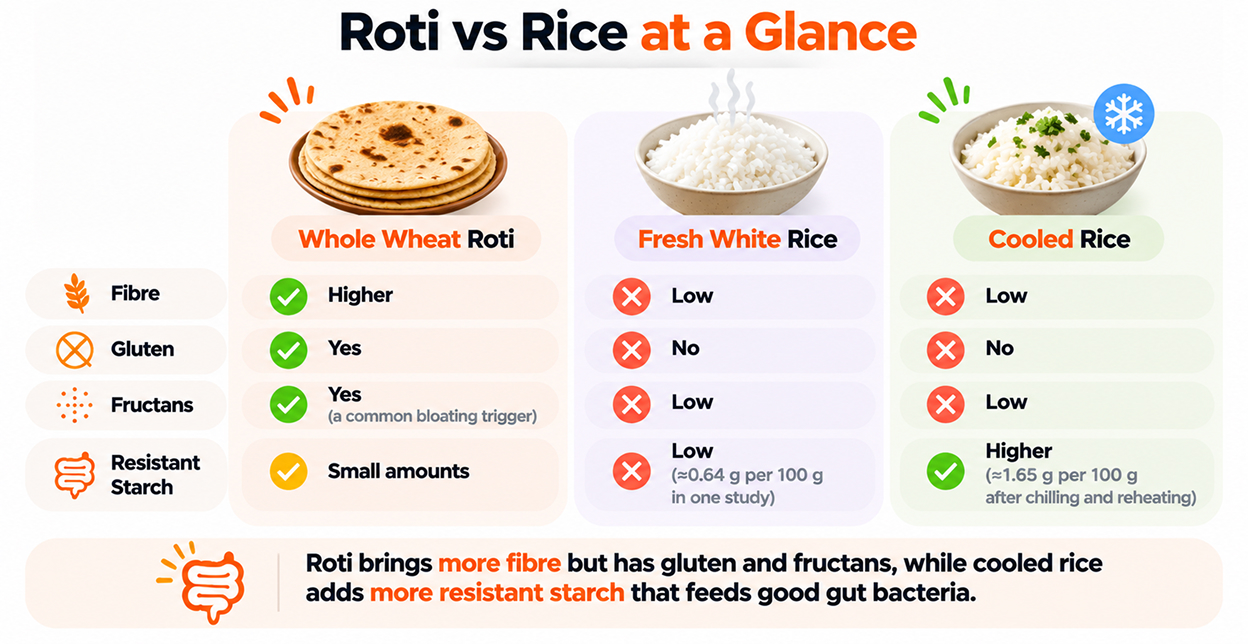
The main differences sit in fibre, fructans, gluten and resistant starch. Whole wheat roti leads on fibre, fresh white rice is the gentlest, and cooled rice offers the most resistant starch. The table below compares the three forms most Indian families eat every week.
| Feature | Whole wheat roti | Fresh white rice | Cooled rice (curd rice, leftovers) |
|---|---|---|---|
| Fibre | Higher | Low | Low |
| Resistant starch | Small amounts | Low (0.64 g per 100 g in one study) | Higher (1.65 g per 100 g after chilling and reheating) |
| Fructans | Yes, a common bloating trigger | Low | Low |
| Gluten | Yes | No | No |
| Blood sugar | Varies by person and portion | Rises quickly, more so in large portions | Smaller rise than fresh rice in one small study |
| Gentle on an upset stomach | Less so | Yes | Yes |
| Best for | Constipation and staying full | Upset stomach and recovery days | Feeding butyrate-making bacteria |
What Happens When Roti Reaches Your Gut
Whole wheat atta keeps the bran, so a roti brings insoluble fibre that adds bulk to stools and helps food move through the gut. Some of its fibre reaches the colon, where bacteria ferment it. That is useful for most people, but wheat also carries fructans, which can cause trouble.
Why Roti Bloats Some People
Fructans are chains of fructose that the small intestine cannot break down. They reach the colon intact, where bacteria ferment them quickly and release gas. In sensitive guts, including many people with IBS, this causes bloating, cramps and gas a few hours after a wheat-heavy meal.
Gluten often gets the blame instead. In a Norwegian trial of 59 people who avoided gluten because of gut symptoms, hidden fructans raised symptoms, while gluten did no more than a placebo.
Consider a common case: a 34-year-old software engineer in Hyderabad swaps her dinner rice for three phulkas to lose weight and starts waking up bloated. The roti is not unhealthy, but her gut may be reacting to the extra fructans. Onion and garlic carry fructans too, which is why a low-FODMAP Indian diet looks at the whole plate, not just the roti.
Gluten and Coeliac Disease in India
Coeliac disease is an autoimmune reaction to gluten, and in India it follows the wheat belt. A study of more than 23,000 Indian adults found it in 1.23% of people in northern India, against 0.10% in the rice-eating south. People with coeliac disease must avoid wheat entirely.
Coeliac disease needs a blood test and a doctor's diagnosis. Stopping wheat before testing can hide the result, so get tested first if you suspect it.
What Happens When Rice Reaches Your Gut
White rice has had its bran removed, so it is low in fibre and digests quickly. That is why khichdi and plain rice are the go-to foods when your stomach is upset. Fresh rice gives your gut bacteria little to work with, but cooling it changes that.
Cooled Rice and Resistant Starch
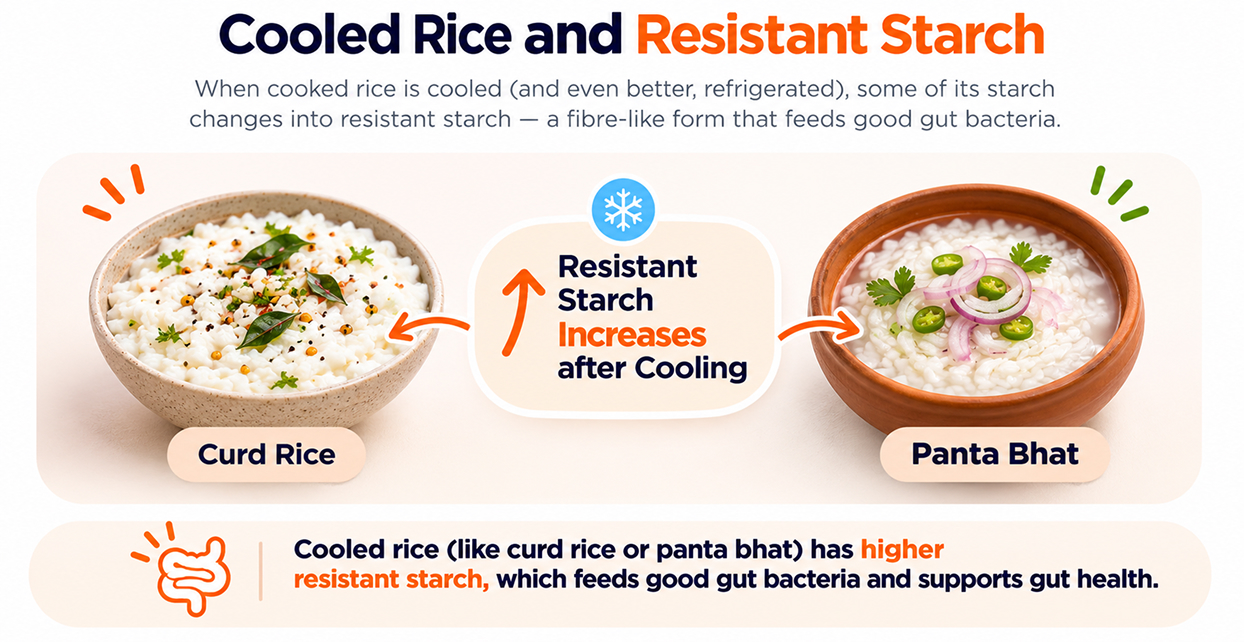
When cooked rice cools, part of its starch reforms into resistant starch, which escapes digestion and feeds gut bacteria. In a 2015 study, rice chilled for 24 hours and reheated had about two and a half times the resistant starch of fresh rice, and raised blood sugar less.
Gut bacteria turn resistant starch into butyrate, the main fuel for the cells lining your colon, as we explain in what your gut bacteria make. Indian kitchens already use cooled rice. Curd rice pairs it with live bacteria from yogurt, and panta bhat in Bengal and pakhala in Odisha soak cooked rice overnight.
A 2024 study of panta bhat found the overnight soak grew lactic acid bacteria and raised the iron, zinc and calcium available from the rice. For ordinary leftovers, follow official food safety advice: cool rice quickly, refrigerate it, eat it within a day and reheat it only once.
Where Millet Rotis Fit
Jowar, bajra and ragi rotis sit between wheat roti and rice. They are gluten-free like rice but bring more fibre, and they add a different grain to your week, which widens the range of fibres your gut bacteria get. They suit people who need to avoid gluten.
Millet dough is harder to roll, so many families mix millet flour with some atta. That still adds variety, though the roti is no longer gluten-free.
Is Roti Better Than Rice for Weight and Blood Sugar?
Less than many people think. In the ICMR-INDIAB survey, swapping white rice and other refined grains for whole wheat or millet flour, without cutting total carbohydrate, was not linked to lower odds of diabetes. The total amount of carbohydrate mattered more than which grain supplied it.
Finely milled atta digests faster than the whole grain, which may explain the result. Three rotis with a small katori of dal is still a grain-heavy meal. A bigger serving of dal, sabzi or yogurt (dahi) next to a smaller grain portion helps more than switching staples, as our guide to the Indian plate and your gut explains.
Gut bacteria also play a part in weight, which we cover in can a poor gut microbiome cause weight gain.
Which Should You Choose?
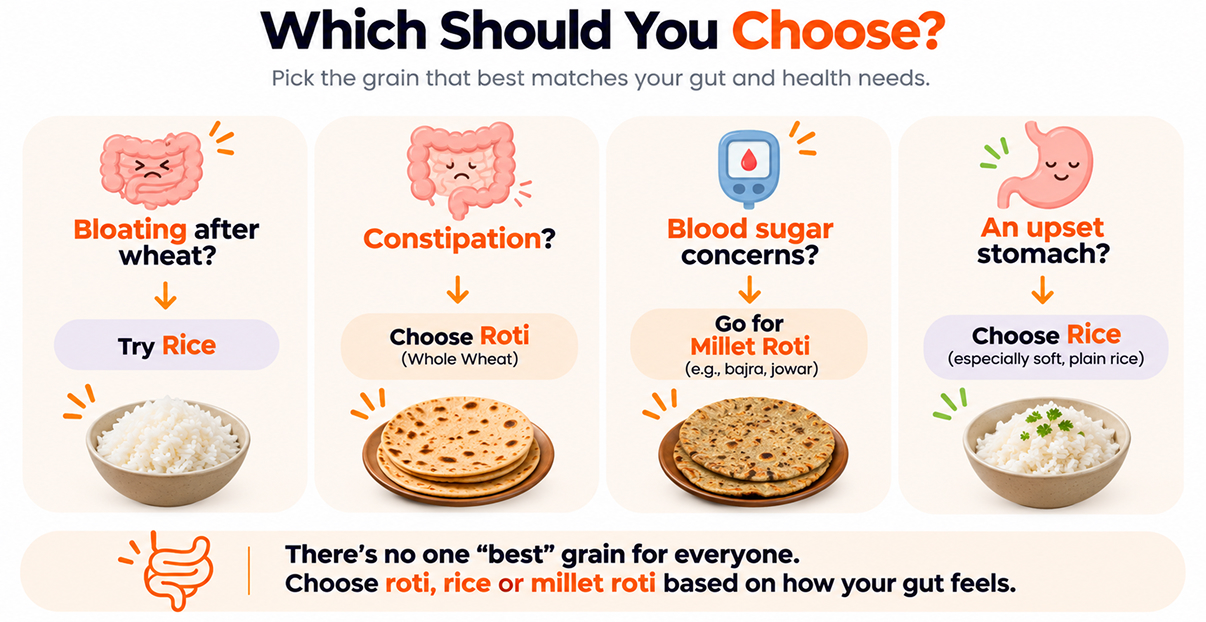
Match the grain to what your gut is telling you. Most people do best rotating whole wheat roti, rice and millets through the week. Change the mix if you have bloating, constipation, an upset stomach or blood sugar concerns, and keep the portion of grain moderate either way.
- Bloating after wheat: try rice or millet rotis for two weeks and note whether symptoms ease. Keep the onion and garlic in mind too.
- Constipation: whole wheat or millet rotis, with enough water, give the bulk your gut needs.
- Upset stomach or recovering from illness: plain rice, khichdi or curd rice are easiest to digest.
- Blood sugar concerns: smaller grain portions, more dal and vegetables, and rice cooked ahead and chilled.
- No symptoms: rotate all three across the week for the widest range of fibres.
Why Your Gut Bacteria Decide the Final Answer
The same grain can affect two people very differently. In an Israeli trial, 20 people ate white bread for a week and whole-grain sourdough for another. On average neither won, but individuals responded differently, and their gut bacteria before the trial predicted which bread raised their blood sugar less.
The same logic applies to roti and rice. A gut microbiome test shows which bacteria you carry, including the fibre-fermenting groups that feed on whole grains and resistant starch. Weight is part of it too, and Bione's precision weight loss programme builds on the same gut data.
Your gut has its own answer to roti or rice. Bione's Gut Microbiome Test reads the bacteria in a stool sample you collect at home, using 16S sequencing. You get a gut health score, a list of foods to eat and limit, and a diet plan built around the Indian meals you already eat. Order your kit online.
Medical disclaimer: This article is for general information only and does not replace advice from a qualified doctor or nutritionist.
Frequently Asked Questions
References
- Sonia et al. 2015, Asia Pacific Journal of Clinical Nutrition
- Skodje et al. 2018, Gastroenterology
- Korem et al. 2017, Cell Metabolism
- Anjana et al. 2025, Nature Medicine (ICMR-INDIAB)
- Makharia et al. 2015, Coeliac disease prevalence in Indian adults
- Afrin et al. 2024, Food and Humanity (panta bhat)
- UK Food Standards Agency: Home food fact checker