
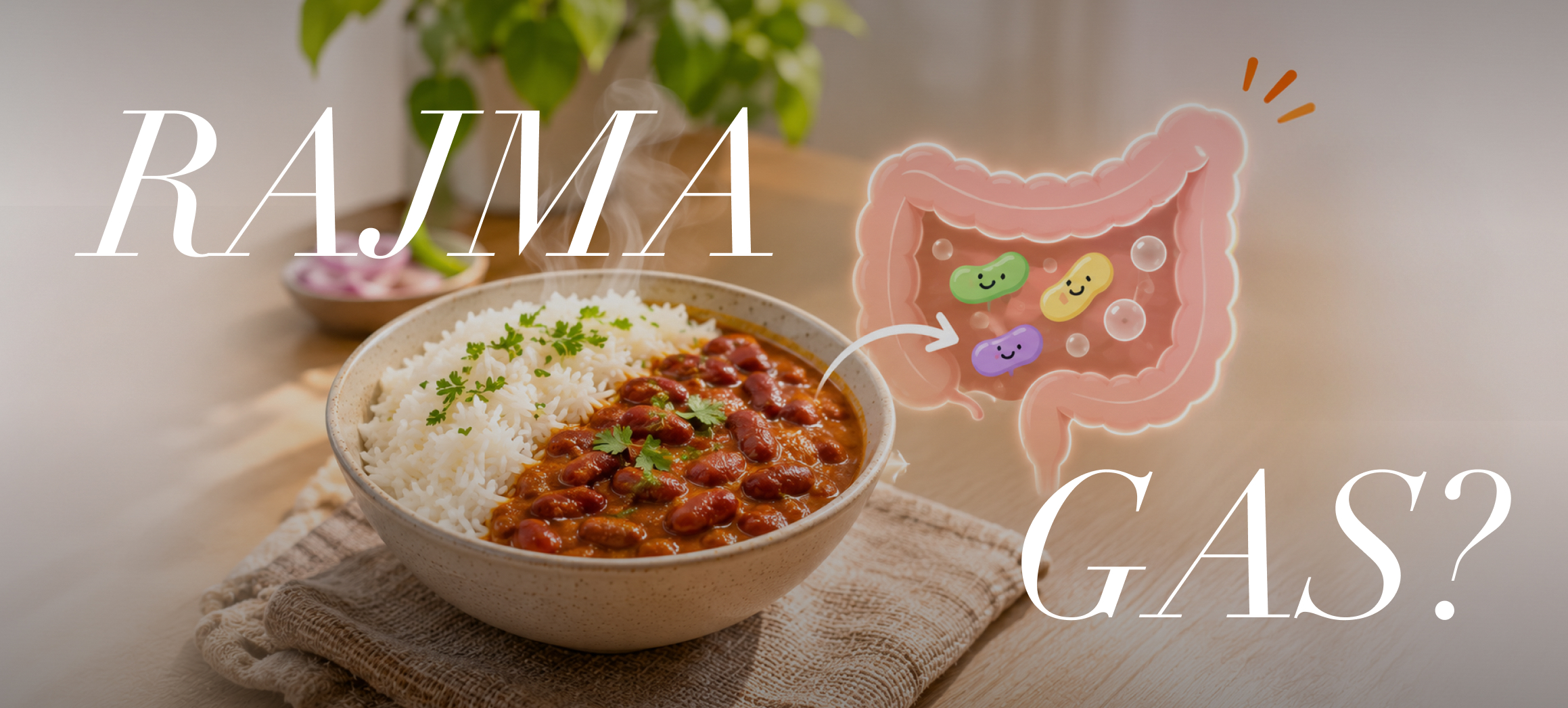
Sunday rajma-chawal is a ritual in many North Indian homes, and so is the bloated, gassy evening that follows. Chole at a wedding, a gym-goer's daily bowl of chana, the urad dal in a Punjabi dhaba thali: pulses feed India, and they also make a lot of people uncomfortable.
The gas is not a sign that dal is bad for you. It is a sign that your gut bacteria are eating. This guide explains what happens, why rajma and chole cause more trouble than moong dal, and the kitchen steps that cut the gas without giving up pulses. A gut microbiome test can add the last piece: what your own bacteria do with them.
Why Does Dal Give You Gas?

Dal gives you gas because pulses contain sugars called raffinose and stachyose that the human gut has no enzyme to digest. They pass the small intestine untouched and reach the colon, where gut bacteria ferment them and release hydrogen, carbon dioxide and, in some people, methane.
These sugars belong to a family called galacto-oligosaccharides, or GOS. Most pulses carry them, from everyday toor dal to rajma, chole, whole urad and lobia. The gas usually builds a few hours after the meal, once the food reaches the colon.
Is Some Gas Normal?
Yes. People pass gas 8 to 14 times a day on average, according to the US National Institute of Diabetes and Digestive and Kidney Diseases. Gas after rajma is part of normal digestion. It becomes a problem only when it comes with pain, strong bloating or changed bowel habits.
The Same Sugars Feed Your Good Bacteria
The sugars that cause gas are also prebiotics. Research shows they help Bifidobacterium and Lactobacillus grow, and their fermentation yields short-chain fatty acids, which fuel the cells lining your colon. Cutting out pulses to stop gas also cuts off food your helpful bacteria need.
That is why a full katori of dal sits at the centre of a gut-friendly Indian plate, and why short-chain fatty acids matter, as we explain in what your gut bacteria make.
Why Rajma and Chole Cause More Trouble Than Moong Dal
Whole beans such as rajma, chole and whole urad generally carry more of these sugars than split, dehulled dals such as moong and masoor, and stay firmer after cooking. Removing the husk lowers these sugars, which helps explain why yellow moong dal is the classic food for a weak stomach.
Beans also differ from one another. In three US feeding studies, fewer than half the people who ate pinto or baked beans every day reported more gas in the first week, and only 19% of those eating black-eyed peas, the lobia of Indian kitchens.
When Rajma Makes You Sick, Not Just Gassy
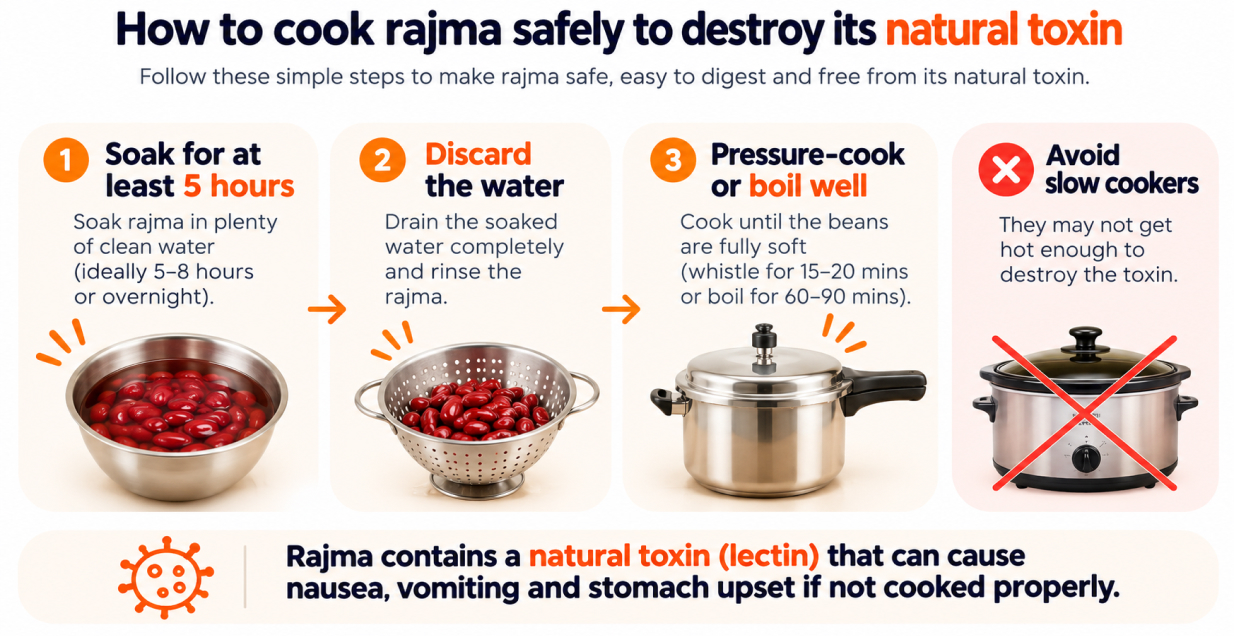
Raw or undercooked rajma contains a natural toxin called phytohaemagglutinin. Eating as few as four undercooked beans can cause nausea, vomiting, stomach pain and diarrhoea within hours. This is food poisoning, not ordinary gas, and proper soaking followed by thorough boiling or pressure-cooking destroys the toxin.
Food safety guidance based on US FDA advice says to soak kidney beans for at least five hours and boil them hard in fresh water. Slow cookers often do not get hot enough, so avoid them for rajma. A pressure cooker run until the beans are completely soft does the job.
How to Make Dal Easier on Your Gut
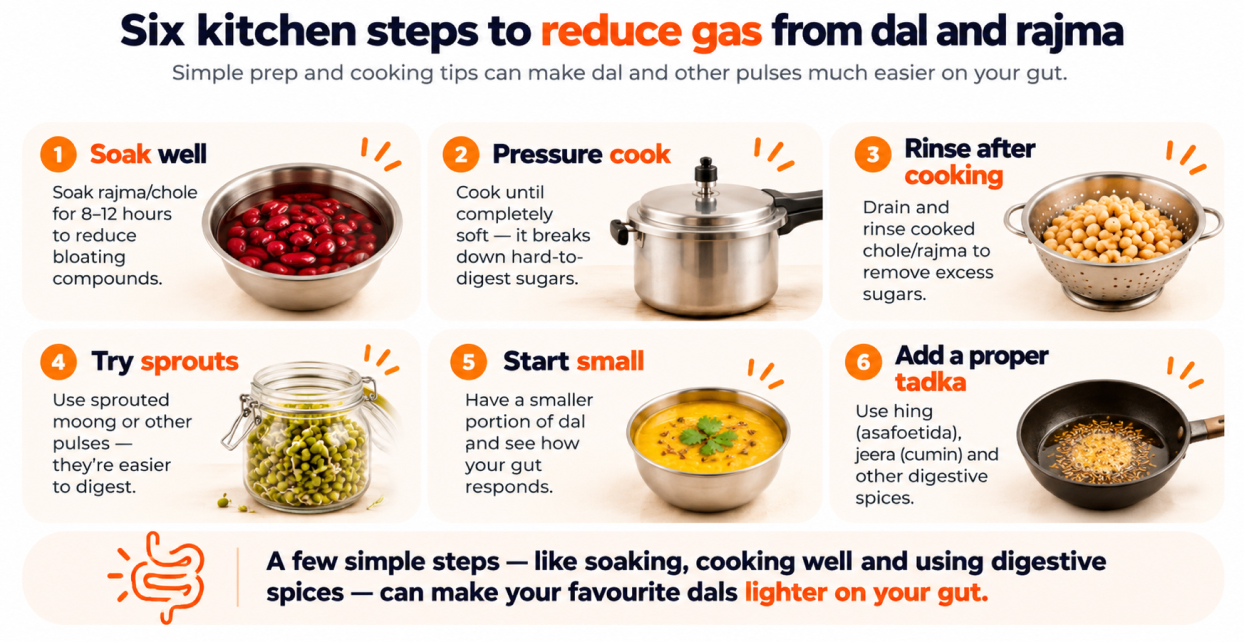
You can lower the gas from pulses at home without eating less of them. Soak them and throw away the water, cook them until fully soft, rinse beans when your gut is sensitive, try sprouts, and build up the amount slowly. Hing in the tadka may help a little.
- Soak and discard the water: soak rajma, chole and whole urad overnight and pour away the soaking water. Studies show soaking draws these sugars out of pulses into the water.
- Cook in fresh water until fully soft: pressure-cook until the beans mash easily between two fingers. Undercooked pulses are harder on the gut and, for rajma, unsafe.
- Rinse beans when your gut is sensitive: Monash University notes that the gas-making sugars leach into cooking water, so boiling, draining and rinsing chole or rajma before adding them to the masala lowers the load.
- Try sprouts: in Monash University testing, sprouting cut the FODMAP content of mung beans enough to move them from high to low. Chickpeas did not improve, so moong sprouts are the better bet.
- Start small and stay regular: begin with half a katori and build up over two to three weeks. The researchers behind the US bean studies concluded that the extra gas is most likely temporary.
- Add hing to the tadka: hing, jeera and ginger are traditional partners for dal. In a 2018 Bengaluru trial of 43 adults with indigestion, more people taking a hing extract saw large drops in bloating than those on placebo, though the trial was small and run with a hing extract maker.
Consider a common pattern: a 41-year-old bank manager in Lucknow loves his Sunday rajma but spends the evening bloated. Soaking the beans overnight, discarding the water and pressure-cooking them until soft, then serving a smaller katori with rice and yogurt, can make the difference without dropping rajma from the menu.
When Gas After Dal Points to Something Else
If gas comes with belly pain, bloating that lasts for hours, diarrhoea, constipation or weight loss, pulses may not be the whole story. Irritable bowel syndrome, small intestinal bacterial overgrowth and other gut conditions can make normal foods feel much worse. A doctor should check symptoms that change suddenly.
For people with IBS, a low-FODMAP Indian diet tested with a dietitian can show whether pulses, onion, garlic or wheat are the main trigger. Wheat's fructans are a common suspect, as we covered in roti or rice. Our guide to the signs of gut microbiome imbalance lists other symptoms worth noting.
Can a Gut Test Explain Your Dal Gas?
A gut microbiome test cannot measure gas, but it shows which bacteria live in your gut and how diverse they are. Two people can eat the same rajma and feel completely different, because their bacteria ferment it differently. Your profile helps you choose which pulses suit you, and how much.
Keep the dal, lose the guesswork. Bione's Gut Microbiome Test uses 16S sequencing on a stool sample you collect at home to map your gut bacteria. Your report gives a gut health score, the foods to eat and limit, and an Indian diet plan you can follow with the pulses you already cook. Order your kit online.
Medical disclaimer: This article is for general information only and does not replace advice from a qualified doctor or nutritionist.
Frequently Asked Questions
References
- Elango et al. 2022, Frontiers in Plant Science
- Han and Baik 2006, Cereal Chemistry
- Winham and Hutchins 2011, Nutrition Journal
- Monash University: Sprouting and FODMAP content
- Monash University: Including legumes on a low FODMAP diet
- Mala et al. 2018, Evidence-Based Complementary and Alternative Medicine
- NIDDK: Symptoms and causes of gas in the digestive tract
- University of Illinois Extension: Kidney beans and slow cookers